
ContractFlowContract review & project intelligence

Expert-verified
contract review.

Understand the obligations, risks and decisions in your construction contract. AI-supported analysis, verified by human experts — with related intelligence to support the rest of your project.

Your contract. AI-supported review. Expert verification.
Clear findings, with sources and practical next actions.

Indicative review · human oversight

From clause to action.

Source / Clause 4.2

Contract extract

Contractor shall give written notice of delay.

Fictional wording, shown as one part of a full contract.

Source reference · 4.2

01 / AI-supported review

Notice obligation

Written notice of delay.

Finding linked to clause 4.2

02 / Human expert

Verify in context

  • Full contract wording
  • Related provisions
    and context

03 / Project action register

Open
Item · Clause 4.2

Delay notices

Proposed next step

Agree a notice process

Proposed owner: project manager

A contract obligation becomes a practical action.
Indicative example · fictional contract wording

01 / Our core service

Know what you’re
agreeing to.

Review the contract, amendments and supporting schedules together. Find the obligations, commercial risks, notice requirements and key dates that need attention.

Human experts verify the contract-review outputs against the source documents before handover. You receive clear findings and practical points to clarify or act on.

Explore the sample reviews

WHAT YOU TAKE AWAY

A review you can work with.

  1. Clause & risk register

    Findings linked to the contract wording and its commercial implications.

  2. Clarifications & priorities

    Questions to resolve, evidence gaps and matters needing a decision.

  3. Practical next actions

    A clear record of the steps to agree and manage with your project team.

Explore project examples

02 / Related services

Support beyond the contract.

Start with one focused review or combine services around your project. Agree the sources, questions, outputs and review responsibilities for each brief.

01 / Before you commit

Bid intelligence

START WITHTender documents, scope, pricing schedules and submitted bids.

THE REVIEW

Compare requirements and offers. Identify scope gaps, qualifications, omissions and pricing questions.

YOUR OUTPUT

A bid comparison, clarification schedule and source-linked findings.

Explore Quote Intelligence

02 / As information changes

Document intelligence

START WITHDrawings, specifications, correspondence and document revisions.

THE REVIEW

Organise records, compare revisions and trace findings to their sources. Make inconsistencies and missing evidence visible.

YOUR OUTPUT

A structured evidence index, revision comparison and questions for review.

Discuss your document pack

03 / Build the quantity basis

Estimating & take-off

START WITHDrawings, checked dimensions, specifications and bills of quantities.

THE REVIEW

Measure slab, excavation and pile quantities. Compare drawing quantities with the bill, keeping assumptions and revisions in view.

YOUR OUTPUT

Traceable quantities, measurement assumptions and a drawing-to-bill comparison.

See a measurement example

04 / Plan the site operation

Logistics intelligence

START WITHSite drawings, access constraints, delivery requirements and working areas.

THE REVIEW

Review vehicle and pedestrian routes, storage, lifting zones and the way access changes through the work.

YOUR OUTPUT

An annotated logistics plan, constraints register and phased site arrangements.

Discuss site logistics

05 / Connect time and cost

5D planning

START WITHThe programme, model elements, quantities and planned cost packages.

THE REVIEW

Connect the construction sequence to model elements and planned expenditure. Explore what is planned at each stage.

YOUR OUTPUT

A linked model, programme and planned-cost view, with assumptions visible.

Try the 5D example

06 / From site records to close-out

Project lifecycle oversight

START WITHSite diaries, photographs, progress updates, changes and handover records.

THE REVIEW

Track progress and emerging issues through delivery. Bring together outstanding information and final-account questions at close-out.

YOUR OUTPUT

Structured diaries through ProjectControl, progress summaries and a close-out action register.

Explore ProjectControl

03 / Working tools within ContractFlow

From a record to a useful next step.

ProjectControl, estimating and take-off, and 5D planning sit within the ContractFlow umbrella. These examples use illustrative data. Working tools are tailored to the agreed scope.

Capture the record

ProjectControl

Site diaries connect daily work, people, outputs, photographs and events to programme activities. Review the entry, fill evidence gaps and retain the history when a record changes.

View the diary example

ILLUSTRATIVE / RIVERSIDE WORKS

Activity
Ground-floor slab, zone A
Record
6 people · 48 person-hours · 120 m² completed
Follow-up
Photo linked. Add the delivery note and check the event against the programme activity.

Make quantities traceable

Estimating & take-off

Use checked dimensions to calculate slab, excavation and pile quantities. Compare drawing quantities with the bill and keep the revision, scope and assumptions beside the result.

Explore the measurement examples

ILLUSTRATIVE / CONCRETE SLAB

12 m8 m250 mm

12 × 8 × 0.25
= 24.0 m³

Fictional written dimensions: 12 m long, 8 m wide, 250 mm thick. No openings or waste allowance. Quantity only; a project estimate needs the complete pricing basis.

Connect time and cost

5D planning

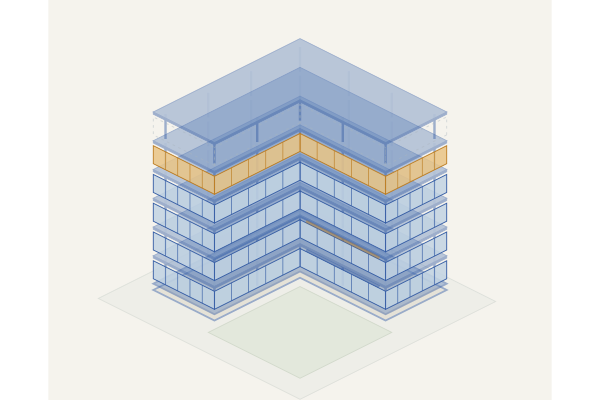
Inspect the building alongside its programme, cost packages and cumulative planned budget. Move through Cedar Court’s fictional 52-week sequence to see how the picture changes.

Planned allocation is shown separately from actual expenditure or earned value.

Open the interactive 5D example
Synthetic six-storey L-shaped Cedar Court building around an open courtyard.

04 / How we work

A clear brief. An inspectable result.

01

Agree the brief

Define the decision, the source material and the useful output. Agree the boundaries, responsibilities and delivery arrangements.

02

Structure the review

Use AI and focused tools to organise information, compare records and surface questions. Keep assumptions and source references visible.

03

Check and hand over

Apply professional judgement to the findings. Hand over the agreed outputs, evidence gaps and practical next actions.

Tool connections and handovers are agreed for each engagement. The examples demonstrate the approach; they do not establish a contractual position or certify project outcomes.

ContractFlow

LET’S MAKE IT PRACTICAL

Start with your contract.
Build a clearer picture.

Tell us about the agreement or project question you need to understand.
We’ll help define the review and any related support.